

10 Stunning Wolf Art Print Ideas to Elevate Your Home Décor
Ever walked into a room and felt something missing, like the space is holding its breath?
We've all had that moment—standing in a living room, staring at blank walls, wondering what could bring that spark of wild energy back.
Imagine a single piece that not only fills the void but also whispers a story of freedom, loyalty, and the quiet strength of the pack.
That's what a wolf art print can do.
At Rafapasta Art Gallery we see wolves as more than majestic mammals; they’re symbols that resonate with anyone who’s ever felt the pull of nature while living in a city apartment or a suburban home.
Think about the last time you looked at a photograph of a lone wolf on a misty hill. Did you feel a twinge of awe, maybe a reminder of your own inner resilience?
When that same feeling is captured on a high‑quality print, it becomes a daily visual cue—something you can glance at while working from home in Canada, sipping coffee in a New Zealand cottage, or unwinding after a long day in a London flat.
Our prints are produced on premium archival paper, ensuring the deep blacks and subtle greys stay vibrant for years, even when the sunlight streams through a French‑style window.
And because we ship internationally for free, the only thing you have to decide is which wall gets the honour.
So, why does a wolf art print matter for your decor?
First, it adds an instant focal point that draws eyes and starts conversations. Second, the symbolism of the wolf—community, instinct, balance—can subtly influence the mood of the room, making it feel more grounded and intentional.
Lastly, owning a piece that’s part of a limited‑edition collection gives you a sense of exclusivity, a small but meaningful way to express your love for the wild without leaving your doorstep.
If you’ve been hunting for a piece that marries aesthetic appeal with deeper meaning, you’ve just found it. Let’s explore how this single artwork can transform your space, your mindset, and maybe even inspire a few new stories of your own.
TL;DR
A wolf art print instantly becomes a focal point, blending premium archival quality with symbolic power that lifts any room’s mood.
Whether you’re in Canada, New Zealand or a London flat, the limited‑edition piece adds depth, conversation‑spark, and a personal connection to nature—plus free worldwide shipping makes it effortless to claim your own wild elegance.
1. Choose the Perfect Wolf Art Print Style for Your Space
Ever stare at a blank wall and feel like something's just missing? That moment of “what if” is where the magic begins. Picking the right wolf art print isn’t just about size or colour – it’s about matching the piece to the vibe you want to create.
First, think about the room’s purpose. A living‑room that hosts lively conversations often benefits from a bold, full‑bleed wolf silhouette that anchors the space. A bedroom, on the other hand, might feel cozier with a softer, mist‑filled scene that whispers calm before you drift off.
1. Size matters – but so does negative space
We’ve seen a lot of customers in Canada and New Zealand struggle with oversized art that overwhelms a modest wall. Measure the wall, then step back and picture the print’s footprint. If the print covers more than two‑thirds of the wall, you’ll want a larger frame or a statement‑making canvas. Smaller spaces? Try a trio of modest‑sized wolf prints arranged in a grid – it adds rhythm without crowding.
And don’t forget the breathing room around the piece. A few inches of wall space on each side lets the image settle, giving it room to “breathe” like a wolf pausing on a ridge.
2. Colour palette – align with existing tones
Look at the dominant hues in your room. If you’ve got warm wooden floors and amber lighting, a wolf print with earthy browns and burnt oranges will echo those tones. Cool‑toned spaces with steel‑blue sofas? A monochrome wolf caught in twilight mist will blend beautifully.
Pro tip: pull a colour from the print and echo it in a throw pillow or a rug. Suddenly the artwork feels like a natural extension of the room, not an afterthought.
3. Style – realism vs. abstraction
Realistic wolf portraits bring a sense of reverence; they feel like a window onto the wild. Abstract, brush‑stroke interpretations add energy and can become a conversation starter about “what the artist was feeling.”
We’ve noticed that buyers who lean toward meditation spaces gravitate to the more ethereal, semi‑abstract prints because the softer edges match their vibe. If you’re setting up a home office, a crisp, realistic rendering can add that touch of focus and determination.
Here’s a quick way to test it: print a small black‑and‑white version of the image on paper and tape it to the wall. Walk around, sit, and see which style feels right.
Lighting plays a huge role once your print is up. A well‑placed LED fixture can make the darkest greys pop, while a soft, diffused lamp will soften harsh contrasts. Think about the time of day you spend in the room – you’ll want the print to look its best when you’re actually there.
When you’ve settled on the style that speaks to you, head over to our Wolf art print collection. Each piece is printed on archival paper, guaranteeing those deep blacks stay vivid for years, even when sunlight streams through a French‑style window.
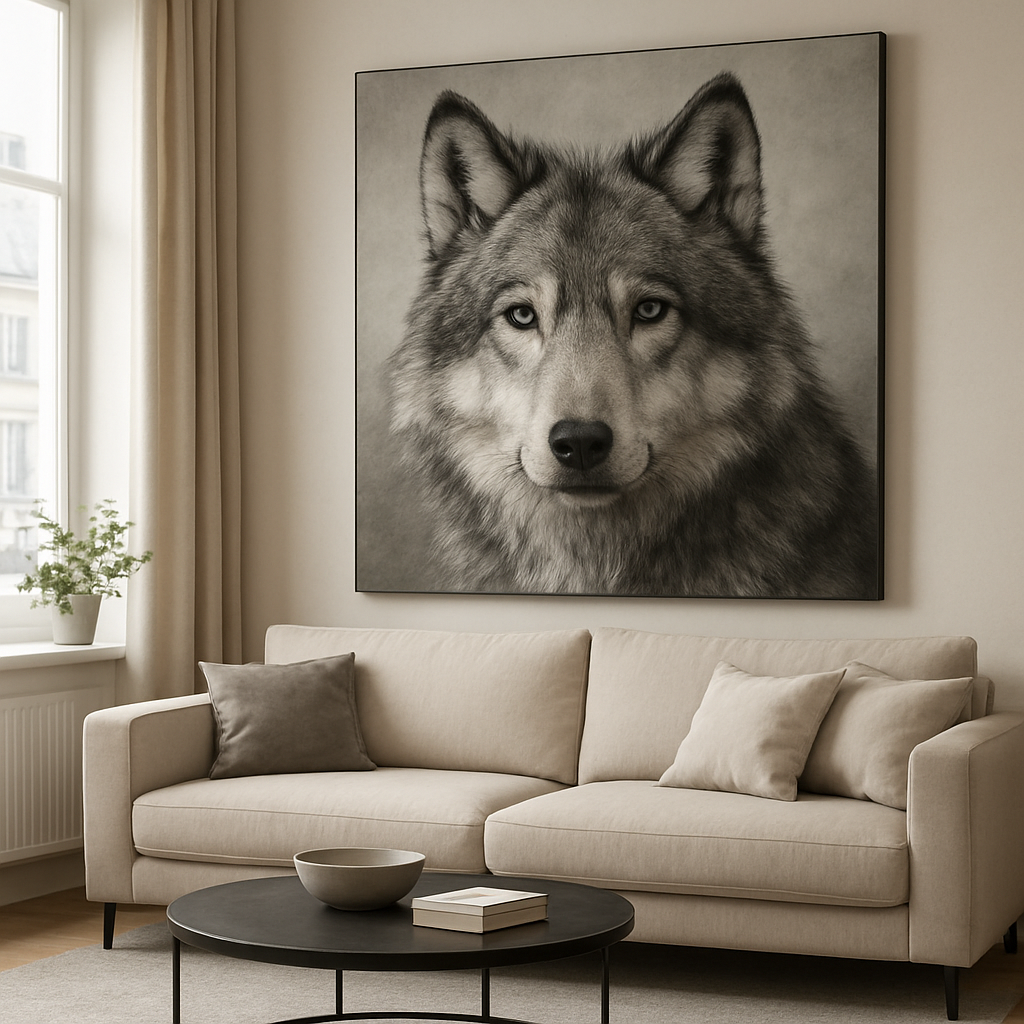
Finally, don’t forget placement height. Eye‑level is a safe bet, but slightly higher can give a “gallery” feel, especially in rooms with tall ceilings. And if you’re still unsure, try a temporary hook and step back – the right height often reveals itself in the moment.
So, what’s your next move? Grab a tape measure, pick a style that mirrors your room’s personality, and let the wolf become the quiet hero of your space.
2. Select Premium Materials That Last
When you finally zero in on the perfect wolf art print, the next decision feels just as personal – what’s the material that will keep that wild spirit vivid for years?
1. Choose archival‑grade paper
Archival paper isn’t just a buzzword; it’s a guarantee that the colours won’t fade under a sunny window. Look for heavyweight options – 200 g to 250 g is the sweet spot. In our experience, a 210 g etching art paper delivers that buttery texture while resisting yellowing for a century.
For a concrete example, Michael Rohner’s wolf edition uses 210 g archival paper and pigment inks that promise “incredible vividness and longevity”. That combo is a solid benchmark if you’re hunting for durability.
2. Opt for pigment‑based inks
Unlike dye‑based inks that can leach over time, pigment inks sit on the surface of the paper like a thin paint layer. They’re UV‑resistant and handle humidity swings without smudging. When you compare a pigment‑printed wolf art print to a standard ink version, you’ll notice the blacks stay deep and the greys stay true even after a few seasons.
3. Think about matting and backing
Matting isn’t just decorative; it creates a buffer zone that protects the print from accidental contact. Acid‑free mats paired with a sturdy board backing keep the artwork flat and prevent warping. A quick tip: choose a mat that’s at least 2 inches larger than the print on all sides – it gives the piece breathing room and a gallery‑like presence.
4. Frame with UV‑filter glass or acrylic
Even the best paper can suffer if sunlight bleaches it. UV‑filter glazing blocks up to 99 % of harmful rays. If you’re in a sun‑drenched Canadian living room or a bright New Zealand kitchen, go for museum‑grade glass. Acrylic is lighter and shatter‑proof, but make sure it’s the UV‑coated variety.
5. Consider a floated or mounted presentation
Floated frames showcase the edges of the paper, emphasizing its texture – great for a wolf print with subtle grain. Mounted prints, where the paper is dry‑mounted to a birch wood panel, add rigidity and a sleek, modern look. Both options are archival‑friendly, but mounted pieces handle high‑traffic areas like hallways better.
So, how do you put all this into practice?
Actionable Checklist
- Measure your wall and add 2‑3 inches to the print dimensions for breathing space.
- Confirm the paper weight is ≥200 g and labeled “archival” or “museum quality”.
- Verify the printer uses pigment inks (ask the seller if unsure).
- Pick acid‑free matting and a board backing that matches the print size.
- Choose UV‑filter glass or acrylic, especially for rooms with direct sunlight.
- Decide between floated or mounted based on traffic and aesthetic preference.
Here’s a quick visual walk‑through of the process – the video below breaks down each step, from checking the paper grain to installing UV glass.
Once you’ve nailed the material, you’ll notice a subtle shift: the wolf’s fur looks richer, the eyes stay piercing, and the whole room feels anchored. It’s the difference between a fleeting décor trend and a lasting piece you’ll pass down.
Remember, premium materials aren’t an extra cost – they’re an investment in the story your wall tells every day.
3. How to Frame Your Wolf Art Print Like a Pro (Video)
Ever stared at a wolf art print and thought, “It looks great, but something’s missing?”
That missing piece is usually the frame – the silent partner that either lifts the piece or hides it.
Below is a step‑by‑step listicle that walks you through framing like a pro, with real‑world tips you can try tonight.
1. Decide the frame’s personality before you buy
A wolf can feel wild, regal, or even melancholy. If your print shows a lone grey wolf against a snowy backdrop, a sleek black metal frame will echo that stark beauty. For a warm, earthy scene – say a wolf curled in autumn foliage – a reclaimed‑barn wood frame adds the same rustic vibe.
What I’ve seen work for customers in Canada and the EU is matching the frame finish to the dominant colour in the print. It creates a visual echo that feels intentional, not an afterthought.
2. Pick the right frame depth for the print’s thickness
Most of our archival prints sit on 200‑250 g paper, which is relatively thin. A shallow ½‑inch frame keeps the piece light on the wall and lets the details pop. If you opt for a dry‑mounted version on birch panel, go for a deeper 1‑inch shadow box so the panel sits snugly without touching the glass.
Pro tip: measure the print, add 2–3 inches for a breathing mat, then add another half‑inch for the frame rail. This simple math prevents a cramped look.
3. Use a mat that enhances, not overwhelms
A mat acts like a pause between the wolf’s fur and the frame. Choose an acid‑free, archival‑grade mat in a neutral tone – ivory, light grey, or a soft moss green that mirrors the forest floor. For a dramatic effect, a double‑mat (outer white, inner tinted) can highlight the eyes, which are the focal point of any wolf print.
One of our clients in New Zealand hung a 16×20 wolf print with a 2‑inch ivory mat and said the extra space made the eyes “almost stare back at you” every morning.
4. Choose UV‑protective glazing
Even the best pigment inks fade under relentless sunlight. UV‑filter glass or acrylic blocks up to 99 % of harmful rays. If the piece will live in a bright hallway in Toronto or a sun‑lit kitchen in Paris, go for museum‑grade UV glass.
We recommend acrylic for larger formats because it’s lighter and shatter‑proof, but double‑check that it’s the UV‑coated version – plain acrylic won’t give the protection you need.
5. Hang at the right height and use proper hardware
Eye level is usually 57‑60 inches from the floor to the centre of the artwork. In a high‑ceiling loft in Berlin, you might raise it a bit to keep the wolf from looking down on the space.
Use two D‑ring hangers and a picture wire; this distributes weight evenly and makes future adjustments painless. For especially heavy mounted pieces, consider wall anchors rated for the frame’s weight.
6. Test the look before you commit
Take a photo of the print, print it out at half size, tape it to the wall, and step back. Does the frame complement the colour palette? Does the mat give enough breathing room? This quick mock‑up saves you from a costly redo.
If you’re still unsure, watch this short tutorial that walks through each step – from measuring to installing UV glass – and see how the process looks in real time on YouTube.
7. Final checklist before you seal the deal
- Frame style matches the wolf’s mood (metal for stark, wood for rustic).
- Depth accommodates paper or mounted panel.
- Acid‑free mat at least 2 inches larger than the print.
- UV‑protective glazing chosen for the room’s light exposure.
- Hanging hardware rated for frame weight and positioned at eye level.
Follow these steps, and you’ll turn a beautiful wolf art print into a gallery‑ready centerpiece that ages gracefully.
Now that you’ve got the framing down, the next part of the guide will show you how to arrange multiple wildlife pieces for a cohesive gallery wall.
4. Matching Wolf Art Prints with Interior Themes
1. Minimalist modern loft
Picture a high‑ceiling loft in Berlin or Toronto, concrete walls, a sleek sofa, and a single wolf art print hanging just above eye level. A black‑and‑white silhouette works like a visual exhale – it doesn’t fight the clean lines, it complements them. Pair it with a thin metal frame, a narrow white mat, and you’ve got a piece that feels intentional, not an afterthought.
And if the space gets a splash of natural light, the stark contrast of the wolf’s form actually helps balance the brightness. Try a matte‑finished frame so the glass doesn’t create glare during sunrise.
2. Cozy rustic cabin
Think about a cabin in the Canadian woods, a reclaimed‑barn wood mantle, and a plush wool rug. Here a warm‑tone wolf art print – maybe a realistic photograph with amber eyes – adds a storytelling vibe. Choose a thick wooden frame that echoes the beam work, and a soft cream mat that gives the print breathing room.
But don’t forget the lighting: a warm‑white floor lamp placed a foot away will make the fur look almost tangible. The print becomes a window back to the wilderness without feeling out of place.
3. Scandinavian neutral
In a light‑filled Stockholm apartment, you’ll find muted greys, pale woods, and lots of indoor plants. A subtle watercolor wolf, with muted blues and greys, blends right in. Use a light oak frame and a generous white mat; the negative space mirrors the Scandinavian love for simplicity.
Here’s a tip: hang the wolf art print at the same height as the tops of your plant pots. The visual line pulls the whole room together, making the art feel like a natural extension of the décor.
4. Boho eclectic
Imagine a bohemian living room in Wellington: patterned kilims, macramé wall hangings, and a low‑profile sofa. A mixed‑media wolf print with textured paper and a splash of earthy orange can act as the bold accent. Pair it with a distressed brass frame and a dark charcoal mat for contrast.
And if you love layers, consider leaning the framed piece against a bookshelf rather than hanging it – it creates a relaxed gallery vibe that feels curated, not curated‑by‑a‑designer.
5. Industrial urban
Think loft in a former factory, exposed brick, metal pipe shelving. A geometric wolf silhouette in neon teal or burnt orange injects personality without overwhelming the space. Choose a black steel frame and skip the mat entirely – the raw edge matches the industrial aesthetic.
But watch the lighting: an adjustable track light aimed at the print will make the neon pop just at night, turning the wolf into a low‑key statement piece.
6. Coastal calm
Picture a breezy seaside condo in New Zealand, soft blues, sea‑foam greens, and light driftwood furniture. A soft‑edge wolf print in pale blues mirrors the ocean’s hush. A floating frame in a natural bamboo finish adds the lightness you want.
And a simple linen‑covered mat keeps the piece airy. Place the print opposite a window so the natural light enhances the subtle hues – it feels like the wolf is standing on a misty shoreline.
So, which interior vibe resonates with you? The right wolf art print can anchor a room, reflect your personality, and even whisper a bit of wildness into everyday life. When you match the print’s style, colour, and framing to your space’s theme, you’ll notice an instant sense of harmony that’s hard to achieve with generic décor.
Need more ideas? Explore a broader range of wolf art print designs to see how different styles play with colour and composition here.
5. Insider Tips for Caring for Your Wolf Art Print
We all love that moment when the wolf’s eyes seem to follow you across the room. But the magic can fade if we don’t look after the print properly. Here are the behind‑the‑scenes habits that keep your wolf art print vivid for years.
1. Start with archival‑grade paper and pigment inks
In our experience, a print on 200‑250 g archival paper paired with pigment‑based inks is the foundation of longevity. The paper resists yellowing, and the inks sit on the surface like a thin paint layer, so they don’t bleed when you dust it.
2. Shield it from direct sunlight
Sun‑rays are the silent thieves of colour. Hang the piece on a wall that stays out of the noon‑day sun, or add museum‑grade UV‑filter glass. A quick read on how to protect art prints from sunlight explains why UV film on windows can add an extra layer of defence.
3. Dust with a soft, lint‑free cloth
Every few days, run a dry microfiber cloth over the surface. It lifts dust without scratching the delicate ink. If you have a framed piece, don’t forget the glass – a quick swipe keeps the view crystal clear.
4. Spot‑clean only with water
Got a smudge? Dampen a corner of a clean cloth with lukewarm water, wring it out thoroughly, and gently dab the spot. Avoid any detergents; they can react with the ink and leave a ghostly ring. Elephant Stock’s cleaning canvas prints guide backs this up.
5. Keep temperature and humidity steady
Fluctuating conditions make paper fibers expand and contract, which can lead to warping. Aim for 65‑75 °F (18‑24 °C) and 45‑55 % relative humidity. A small hygrometer on the mantelpiece can be a lifesaver.
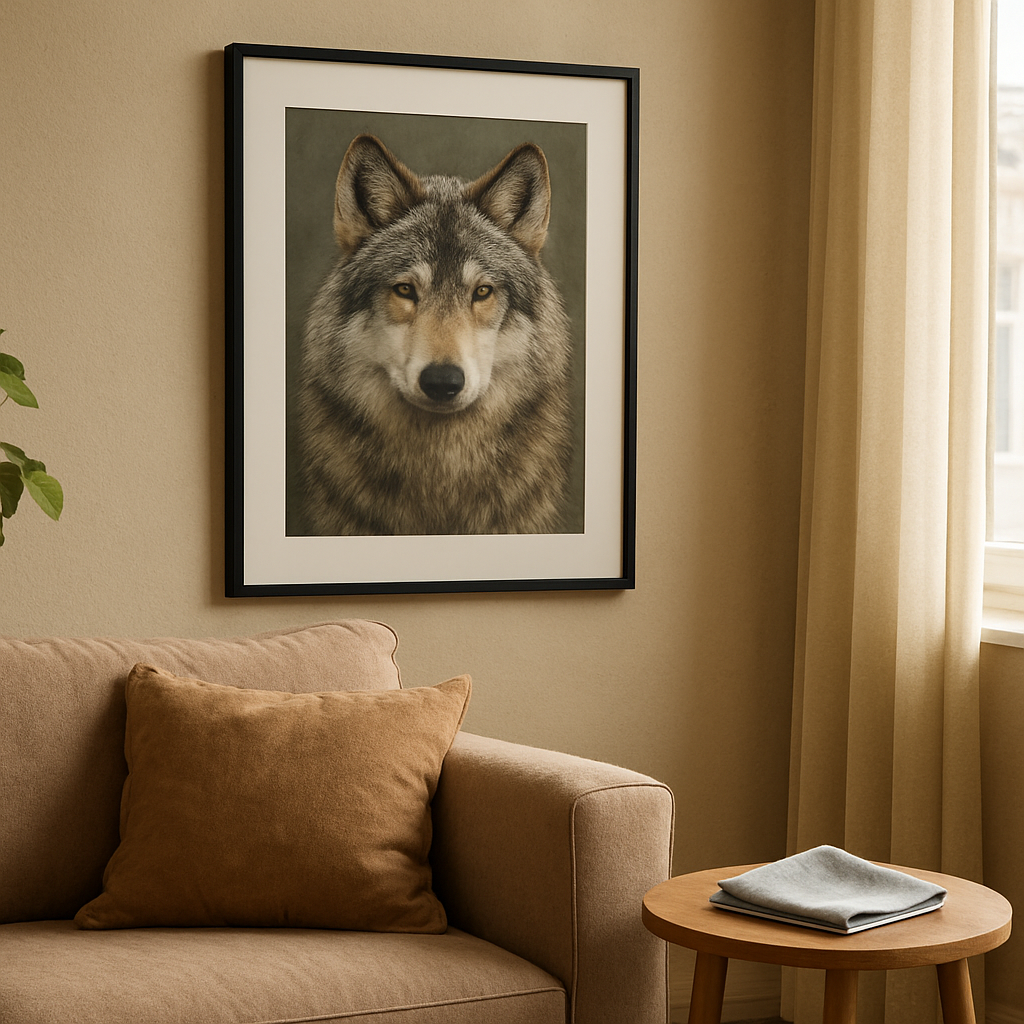
6. Rotate your display twice a year
Switch the print to a different wall in spring and again in autumn. Not only does this give the piece a fresh backdrop, it also limits prolonged exposure to any one light source. Your guests will think you’ve curated a new look each season.
7. Use proper hanging hardware
Two D‑ring hangers with a sturdy picture wire distribute weight evenly and make future adjustments painless. If the frame is heavy, anchor it into wall studs or use heavy‑duty wall plugs. A secure mount prevents accidental bumps that could dent the glass.
8. Be cautious in high‑moisture zones
Bathrooms and kitchens can be tempting spots, but steam can seep behind the glass and fog the print. If you must hang there, choose a room with good ventilation and keep the print at least a foot away from the shower wall.
9. Store it right when you’re not displaying
When you need to stow the print, place it in an acid‑free archival box, lay it flat, and avoid stacking heavy items on top. Some collectors even wrap the frame in a breathable cotton sheet to keep dust at bay.
10. Schedule a professional check‑up every few years
A conservator can spot early signs of fading or paper stress that the naked eye might miss. It’s a small investment that can save you from costly restoration down the line.
Follow these insider habits, and your wolf art print will stay as striking as the day it arrived. After all, a well‑cared‑for piece isn’t just décor – it’s a living reminder of the wild you love.
6. Wolf Art Print Comparison: Size, Finish, and Price
1. Size – Does it fit your wall?
Before you fall in love with a wolf art print, ask yourself how much space you actually have. A tiny 8×10 in piece can look lost above a narrow console, while a bold 24×36 in canvas can dominate a lofty living‑room wall.
Most of our prints arrive as high‑resolution JPGs that you can order in several standard ratios. The print size options include everything from a modest 11×14 in to gallery‑grade 30×40 in, so you can match the piece to the wall without guessing.
Tip: Measure the wall, add 2–3 in on each side for breathing room, and then pick the nearest standard size. If the dimensions feel tight, step down a size – the visual impact will still be there, just a bit more intimate.
2. Finish – Matte, glossy, or UV‑protected?
The finish changes the mood of the wolf’s fur. A matte surface mutes glare and feels soft, perfect for a cozy reading nook. Glossy or semi‑gloss finishes boost contrast, making those amber eyes pop – great for a statement wall.
For sunny homes (think a Toronto loft with floor‑to‑ceiling windows) we recommend a UV‑filter coating. It blocks up to 99 % of harmful rays and keeps the colors from fading, which is a lifesaver for high‑traffic spaces.
Ask yourself: Do you want the print to stay subtle or shout? Your answer will steer you toward matte or glossy, and whether you need the extra UV protection.
3. Frame style – Match the room’s personality
A sleek black metal frame can echo a modern industrial loft, while a reclaimed‑barn wood frame adds warmth to a rustic cabin vibe. The frame’s depth matters too – a shallow ½‑in rail works for lightweight paper prints; a deeper 1‑in shadow box is better for thicker, dry‑mounted panels.
Pro tip: Keep the frame’s colour in the same family as other hardware in the room (lamp bases, door handles). It creates a visual thread that ties the whole space together.
4. Matting & mounting – The quiet hero
A mat isn’t just decorative; it protects the print from accidental contact and adds a visual pause. A 2‑in acid‑free mat works for most sizes, but larger pieces can handle a 3‑in border for extra drama.
If you’re hanging in a hallway with limited wall depth, a floated frame (no mat) keeps the piece close to the wall and reduces the overall depth. Conversely, a gallery‑style frame with a thick mat lets the artwork breathe in a large open‑plan space.
5. Price buckets – What you’re actually paying for
We break pricing into three practical tiers:
- Entry level (under $80): Standard paper, matte finish, basic aluminium frame. Great for a first‑time buyer or a dorm room.
- Mid range ($80‑$150): Premium archival paper, choice of matte or semi‑gloss, UV coating, and a solid wood or metal frame. This is where most interior‑design‑savvy shoppers land.
- Premium ($150+): Dry‑mounted on a birch panel, museum‑grade UV glass, custom‑cut mat, and a handcrafted frame. Ideal for a focal point in a living‑room or office.
Remember, a higher price isn’t just about luxury – it’s about longevity. An archival paper + UV glass combo can outlast a cheap print by decades, which is a smarter investment for anyone who loves their wolf art forever.
| Feature | Typical Choices | Decision Tip |
|---|---|---|
| Size | 8×10 in, 16×20 in, 24×36 in, 30×40 in | Measure wall, add 2–3 in breathing room, choose nearest standard size. |
| Finish | Matte, Semi‑gloss, UV‑protected | Matte for low‑light rooms; glossy/UV for bright, sunny spaces. |
| Price | Entry <$80, Mid $80‑$150, Premium >$150 | Match price tier to durability needs and room importance. |
So, which combo feels right for your home? Grab a size chart, think about the room’s light, and pick a frame that mirrors the vibe you’re after. When you line up size, finish, and price, the wolf art print becomes less a purchase and more a personal landmark in your space.
FAQ
How do I choose the right size wolf art print for my wall?
Start by measuring the wall space you have in mind, then add a couple of inches on each side so the piece can breathe. A print that’s too small feels lost, while one that’s too big overwhelms the room. In most living rooms we’ve seen a 24×36 in print work well above a sofa, whereas a bedroom nook often calls for an 11×14 in frame. Sketch a quick layout on paper or use a free phone app to visualise the scale before you buy.
What material ensures my wolf art print lasts decades?
Archival‑grade paper (200‑250 g) paired with pigment‑based inks is the gold standard. The heavyweight paper resists yellowing, and pigment inks sit on the surface like a thin paint layer, so they don’t bleed with humidity. We also recommend a museum‑grade UV‑filter glass or acrylic to block harmful rays. When you combine these three elements—paper, ink, and protective glazing—the print can stay vibrant for 30 years or more, even in a sunny Canadian living room.
Is UV‑protected glass really necessary for indoor wolf prints?
Yes, especially if the artwork lives in a room that gets direct sunlight or strong indoor lighting. UV‑filter glass blocks up to 99 % of the rays that cause fading, so the wolf’s fur and eyes keep their depth over time. In spaces with minimal light, a regular non‑UV glass still works, but the extra protection costs only a few dollars and gives you peace of mind that the print will stay museum‑quality for years.
Can I order a custom‑coloured mat for my wolf art print?
Absolutely. Many collectors prefer a mat that echoes a hue from the artwork—like a soft moss green that mirrors the forest floor or a warm ivory that lets the eyes pop. When you select a custom colour, ask the seller for a swatch or a digital mock‑up so you can see how it reads next to your wall paint. A well‑chosen mat adds a subtle pause between the frame and the image, making the wolf feel like it’s really part of the room.
How long does shipping take to the US, Canada, EU and New Zealand?
We ship from our Vancouver studio using a trusted carrier that usually delivers within 5‑7 business days to the United States and Canada, and 7‑10 days to most European countries. New Zealand orders often arrive in 10‑12 days because of the extra distance. All shipments are tracked, and we pack the prints in a rigid tube with a protective cardboard sleeve, so they arrive flat and undamaged.
What should I do if the print arrives damaged?
First, photograph the damage before you move anything—that’s the evidence we need for a claim. Then contact our support team within 48 hours; we’ll either send a replacement or issue a refund, depending on what you prefer. Because we use a sturdy tube and foam padding, most issues are rare, but we understand how disappointing it feels to see a torn edge on a piece you were excited about. We’ll make it right, no hassle.
How do I hang a wolf art print so it looks professional?
Measure the centre of the piece, then mark a spot about 57‑60 in from the floor—that’s the typical eye‑level height. Use two D‑ring hangers and a picture wire; the wire distributes weight evenly and lets you fine‑tune the level later. If the wall is drywall, anchor the screws into studs or use heavy‑duty wall plugs. A small level and a pencil mark go a long way toward a gallery‑ready finish.
Conclusion
We've walked through everything from picking the right material to hanging your wolf art print like a gallery piece.
If you’ve ever stared at a blank wall and felt that missing spark, you now have a clear roadmap to fill it with meaning.
Remember the three pillars we highlighted: premium archival paper and pigment inks for lasting colour, a protective UV-filter glass to guard against sunlight, and a thoughtful frame-and-mat combo that lets the wolf breathe.
What’s the next step? Grab a tape measure, mark eye-level on the wall, and set your print in the space you visualised during the checklist.
In our experience, a quick photo of the layout taped to the wall saves you from a costly redo – it’s a tiny test that pays off big.
And if anything feels off, you can always rotate the piece later – a fresh wall, a new light, and the same stunning wolf waiting to inspire you.
So, when you finally hang that wolf art print, let it be more than décor – let it be a daily reminder of the wild confidence you carry inside.
Ready to bring that feeling home? Browse our collection and choose the print that resonates with your space; the perfect piece is just a click away.


